The book was written by Theodore A. Anderson without the use of AI.
The future of warfare is changing rapidly as artificial intelligence moves from science fiction into real-world military applications. AI is influencing drones, battlefield intelligence, autonomous systems, cyber warfare, and military decision-making. As these technologies develop, they are raising important questions about speed, human control, accountability, and the role of technology in future conflicts.
How AI Is Reshaping Modern Warfare
Here’s the thing. Wars used to be about who had more soldiers, better supply lines, sharper generals. That calculus is changing fast. Like, genuinely fast — not “fast for government” fast, but actually fast.
Militaries aren’t just buying better guns anymore. They’re investing in systems that think. Or at least, systems that process information and act on it quicker than any human ever could. AI military applications are no longer just a wish-list item discussed in military planning rooms. They are being developed, tested, and increasingly integrated into modern defense systems.
You probably haven’t noticed because it doesn’t make for great TV. A drone that identifies a target through pattern recognition isn’t as cinematic as an explosion. But strategically? It changes everything.
The Drone Situation Is More Advanced Than You Think
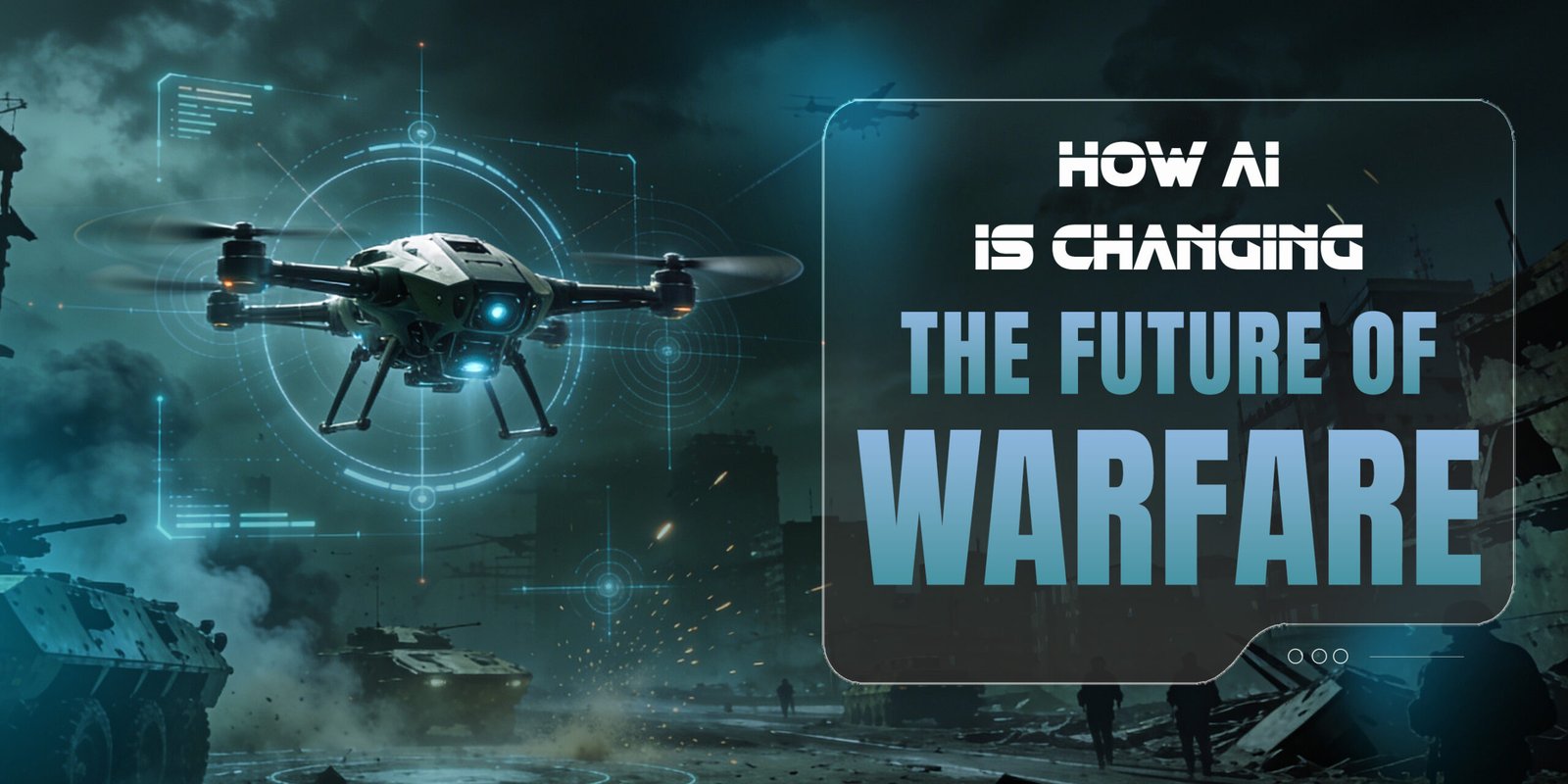
Drone warfare technology has moved so far beyond what most people picture. Forget the clunky remote-controlled aircraft from a decade ago. What’s being developed and deployed now involves coordination, adaptability, and in some cases — genuine autonomy.
Drone swarms are a real thing. Hundreds of small unmanned systems flying in formation, communicating with each other, adjusting tactics mid-flight based on what they encounter. No single operator controls each one. They work collectively, almost like a hive. Military forces are increasingly testing and developing coordinated drone systems that can share information, operate in groups, and perform tasks with varying levels of autonomy. That is one of the developments making the future of warfare increasingly difficult to predict.
And here’s what makes drone warfare technology particularly worth paying attention to: the cost barrier is dropping. What used to require a nation-state budget is becoming accessible to much smaller actors. That changes the threat landscape in ways traditional defense strategy wasn’t designed for.
The Rise of Autonomous Weapons Systems
Let’s be honest about something. Autonomous weapons systems make militaries more efficient. That’s not really in dispute. The part everyone dances around is accountability.
When a machine makes a lethal decision — and it goes wrong — who is responsible? The engineer who designed it? The commander who authorized its use? Or the country that deployed it? International law and existing military rules are still evolving around questions of responsibility, human control, and autonomous weapons. As the technology develops rapidly, legal and policy frameworks are still working to keep pace.
Theodore A. Anderson explores this kind of future in Shin Misaki:Future Dark Ages of World War IV, a science-fiction story that examines survival, conflict, human resilience, and the consequences of a world transformed by global war. The book imagines a world where that accountability gap has collapsed entirely, and the consequences are exactly as grim as you’d expect. Fiction, yes—but the kind that makes you put the book down and stare at the ceiling for a while.

Human-machine collaboration was supposed to be the middle ground — humans stay in the decision loop, machines handle processing. But in real-time conflict scenarios, that loop shrinks. The machine flags. The human approves. Except when engagements happen in seconds, that approval becomes more of a rubber stamp than a genuine check.
What Does a Digital Battlefield Look Like?
People hear “digital battlefield” and imagine something from a video game. The reality is less dramatic visually, but far more consequential.
AI battlefield systems are pulling together satellite imagery, intercepted communications, sensor feeds, and historical data simultaneously. They’re not just watching — they’re predicting where forces will move and where vulnerabilities exist. What the enemy is likely to do next.
Military automation at this level means decisions that used to take hours now take minutes. Sometimes seconds. The side that processes information faster holds a massive advantage, and everyone serious about future military technology knows it.
Cyber warfare fits into this too — and honestly it might be the piece that matters most long-term. Attacking an enemy’s power grid, financial systems, or communications through code can be just as devastating as a physical strike. Often more so. And it’s harder to prove, harder to retaliate against, and easier to deny. Machine decision-making in cyberspace is already running at a pace no human analyst can keep up with.
The Part That Doesn’t Get Talked About Enough
Robotic warfare and autonomous military systems raise something that efficiency metrics don’t capture. When you take human beings out of the moment of lethal force, you also remove whatever internal friction slows that force down. Hesitation. Doubt. The weight of consequence.
That’s not always a bad thing in theory — panic and emotion cause mistakes too. But there’s something worth sitting with here. Advanced military technology has always forced societies to ask hard questions. Nuclear weapons did. Chemical weapons did. AI-powered warfare is next in that line, and the conversation at a public level is nowhere near where it needs to be.
Robotic warfare isn’t coming. It’s here, in early form. The question is whether the ethical and legal frameworks around it will catch up before something goes badly wrong.
You Might Also Like
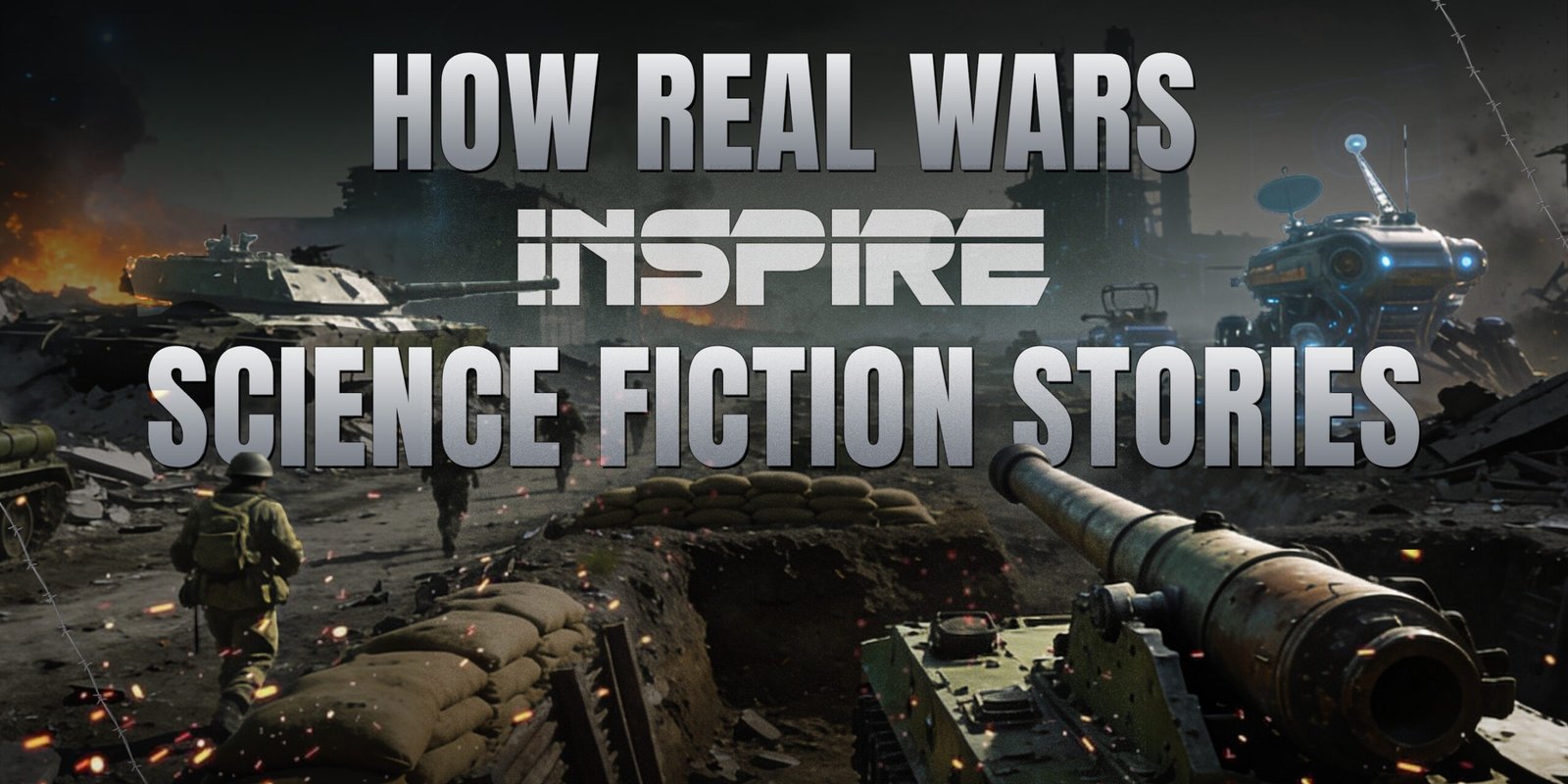
Enjoyed this deep dive? You’ll also want to read How Real Wars Inspire Science Fiction Stories — a look at how history’s battles have shaped some of fiction’s most gripping dystopian tales.
FAQs
Some are, yes — particularly in surveillance, targeting assistance, and cyber operations. Fully autonomous lethal systems with no human in the loop are still largely in testing phases, but partial autonomy in weapons systems is already operational in several countries.
Speed and scale, mostly. Previous technologies changed what weapons could do. AI changes how fast decisions get made and how much information can be processed at once. It compresses the decision cycle in ways that fundamentally alter how conflict unfolds.
Genuinely, yes — not in a panic-in-the-streets way, but in a pay-attention-to-policy way. The decisions being made right now about how these systems are built, constrained, and governed will have long-term consequences. Public pressure on those decisions actually matters.