Dystopian themes explore life in societies shaped by oppression, surveillance, inequality, loss of freedom, or excessive control. Dystopian fiction uses these ideas to examine how power affects individuals and communities, often through imagined societies that reflect real human concerns.
Ever finish a dystopian novel and just sit there? Not scared. Just off, somehow. Can’t really explain it. That’s part of the appeal. These stories take familiar concerns and push them into worlds where the consequences are impossible to ignore. Power. Control. Freedom. What happens when those things start slipping away?
Most of these stories keep circling back to three questions. Who has the power? How is that power maintained? And what happens to freedom when control becomes the norm?
What Makes a Story Dystopian, Really
No fluff version. A dystopian story shows a society where something’s badly wrong. Freedom, equality, safety, or individual choice has been seriously restricted. Regular people lose choices they once took for granted. Sometimes it happens slowly. Sometimes all at once, which can make it even more unsettling.
Common dystopian themes keep showing up because the fears underneath are old. Really old. Authoritarian government. Mass surveillance. Loss of freedom. Nothing new here. Just new packaging every so often.
Power and Control Themes You’ll Recognize
You’ve seen this. Even if you never named it out loud. Power and control themes, usually some mix of:
- Government oppression can be presented as a necessary form of safety or protection.
- Social control through fear, propaganda, manufactured scarcity- take your pick, really
- Technological control, surveillance gets so normal nobody blinks
- Political power stacked in one leader, one party, one shadowy little committee
What makes it land isn’t the mechanics. It’s how familiar the excuses sound.“For your protection.” That kind of language makes control sound reasonable, which is exactly what makes it effective in dystopian fiction.
Why Freedom in Dystopian Fiction Hits So Hard
Freedom in dystopian fiction rarely vanishes overnight. Not usually how it’s written. In fiction, freedom often erodes gradually. A curfew here. Registration there. A new restriction that seems temporary. By the time people recognize the larger pattern, their choices may already be limited.
Slow burn, on purpose. Not lazy writing, whatever it looks like at first glance. Mirrors how loss of freedom actually creeps, slow enough that pushing back feels pointless, until suddenly it doesn’t. Readers get it because, uncomfortably, it feels real.
Dystopian Themes of Oppression and Why They Keep Coming Back
Oppression rarely looks the same twice. Sometimes loud: boots, checkpoints, obvious stuff. Sometimes quiet. An algorithm deciding who gets access to jobs, services, information, or opportunities can create a quieter form of control.
Dystopian themes of oppression borrow from actual history. Not made-up nightmares. Social inequality. Individual identity, flattened or standardized. Resistance movements, basements, because that’s the only space left. Writers just push what already happened a bit further. That’s the whole trick, basically.
Quick way to see this play out:
| Dystopian Element | What It Usually Represents |
| Surveillance systems | Fear of losing privacy and autonomy |
| Rigid class structures | Real-world social inequality, exaggerated |
| Censorship | Loss of expression and access to information |
| Rebellion movements | Hope that resistance is still possible |
| Charismatic leaders | Danger of unchecked political power |
Feels a bit close to headlines you scrolled past last week? Yeah. Not an accident. Good dystopian fiction steals its tension from the real world, no apology about it.
Rebellion in Dystopian Fiction, and Why You End Up Rooting For It
Rebellion in dystopian fiction gives you something to hold onto. Without it, stories can feel bleak for the sake of being bleak. With it, characters claw back tiny pieces of agency, even when everything’s stacked against them.
Part of why dystopian stories about control resonate is that you’re not just watching oppression happen to someone. You’re watching them push back. One small act of resistance can feel huge when the story gives it the right weight.
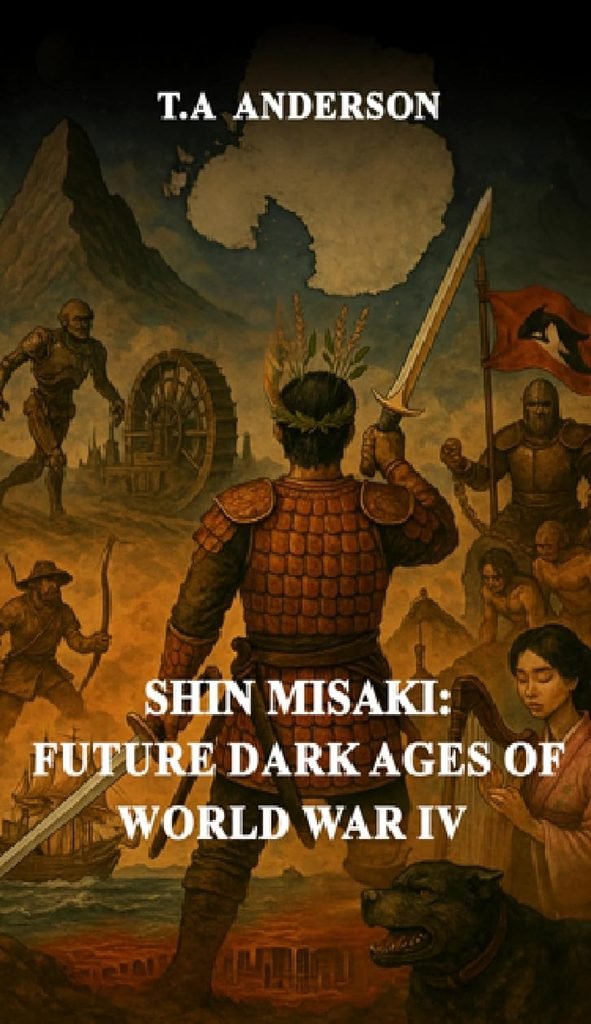
Theodore A. Anderson explores similar ideas in Shin Misaki and the Future Dark Ages of World War IV. The story follows survival, conflict, discipline, and resistance in a future shaped by global war.
Dystopian Themes in Literature Aren’t Going Anywhere
Dystopian themes in literature keep changing as the concerns behind them change. Different periods have brought different issues into dystopian fiction. Stories may focus on authoritarian power, war, inequality, surveillance, technology, or the loss of individual freedom
What stays the same is the core tension. Someone wants control. Someone else wants out from under it. Everything else is just set dressing.
Liked chewing on why fiction keeps circling these fears? You might get something out of reading why we are fascinated by the end of the world. Both genres share a lot of the same emotional DNA underneath, weirdly enough.
Final Thoughts
Dystopian fiction sticks with you because it is rarely just about an invented future. It is about power, control, freedom, resistance, and the choices people make when those things are threatened.
Theodore A. Anderson explores these ideas through stories of conflict, survival, discipline, and resistance. As long as readers remain interested in questions about power and freedom, dystopian fiction will continue to give them new worlds in which to explore those questions.
FAQs
Dystopian themes usually center on authoritarian government, mass surveillance, loss of freedom, and social inequality. Stories dig into what happens when power piles up in too few hands, and ordinary people lose basic choices.
Control creates conflict; rebellion creates hope, plain and simple. Without resistance, dystopian fiction’s just bleak. Rebellion gives readers something to root for, even against odds that feel completely stacked.
t borrows heavily from real history and current events, honestly. Surveillance, propaganda, and social inequality already exist in some form. Dystopian fiction just pushes familiar patterns a little further than reality has, so far anyway.