Books about survival drop ordinary people into impossible spots: a war, a collapse, a long walk with no food. The best include The Road, On the Beach, Alas, Babylon and A Canticle for Leibowitz. This guide also covers true accounts and one newer dark novel worth a look.
Some of these books leave you rattled for days. If you’re hunting for survival books to read next, aim for the ones where the setting is brutal but the people still feel like people.
Why You Keep Reading When It Gets Grim
Be honest. Nobody picks these up for a relaxing evening. You pick them up because some part of your brain wants to know how you’d cope when the shelves are empty and the phone doesn’t work. Survival stories in books give you a rehearsal without the risk. And somewhere around chapter ten, the story stops being about tinned food and starts being about human resilience, which is a stranger and more interesting thing.
You probably know the feeling. It’s 1 a.m., you’ve got work in the morning, and you’re still reading because a character just made a bad call and you need to see the damage. That’s the genre doing its job.
Signs a Story Is the Real Deal
- Every decision costs something
- The characters sweat, shake and get scared. They don’t glide through.
- Harsh environments matter: cold, distance, no clean water
- You don’t get the full backstory on page one. The world leaks out slowly, and you’re left to piece it together
When the Armies Leave and the Mess Stays
Survival novels about war come in two flavors. One stays on the front line. The other waits until the guns go quiet, then follows whoever’s left. Survival stories after war are usually the harder read, because there’s no enemy to point at anymore, just hunger and neighbors you can’t quite trust. Global conflict makes a lot more sense once you see it through a kid searching for a clean well.
Good war and survival fiction rarely cares about generals. It cares about the woman rationing flour, or the old man who knows which bridge is gone.
A Few Titles to Start With
Not all books about survival feel alike, so go by mood. Plenty of lists of the best survival fiction books include these:
- The Road by Cormac McCarthy. A father, a son, ash everywhere, and a shopping cart.
- On the Beach by Nevil Shute. After a nuclear war, people in Australia wait for the radiation to reach them and decide how to spend the time they have left.
- Alas, Babylon by Pat Frank. Nuclear war hits, and a Florida town has to work things out on its own.
- A Canticle for Leibowitz by Walter M. Miller Jr. Monks guard old documents they barely understand while society slowly goes about rebuilding itself.
Prefer historical fiction books? All the Light We Cannot See by Anthony Doerr drops two young people into the Second World War and lets the chapters alternate between them.
Novels vs True Accounts: Which One Hits Harder?
Fiction isn’t the only way in. Some people only trust true stories. Here’s how the two stack up:
| Feature | Novels | True accounts |
| Pacing | Built for tension | Follows real events, so it can drag |
| Setting | Invented futures, collapsed worlds | Only what actually happened |
| Weight | Gives you some distance | Hits harder, because it was real |
| Best for | Escape with a point | Understanding history |
Take Man’s Search for Meaning by Viktor Frankl. He was a psychiatrist held in Nazi concentration camps, and he wrote about what kept some prisoners going. It sits on nearly every list of survival books about resilience, and for good reason. Novels do something else, though. They let you stand inside an invented future and watch a society get rebuilt (or fail to). Anyone who loves books about human survival usually ends up reading both anyway.
A Darker, Newer Pick
Theodore Anderson is a home for dark science fiction, the kind that cares about broken systems and what people do to stay alive.
The writer behind it is Theodore A. Anderson, who tends to build characters out of pressure rather than polish.
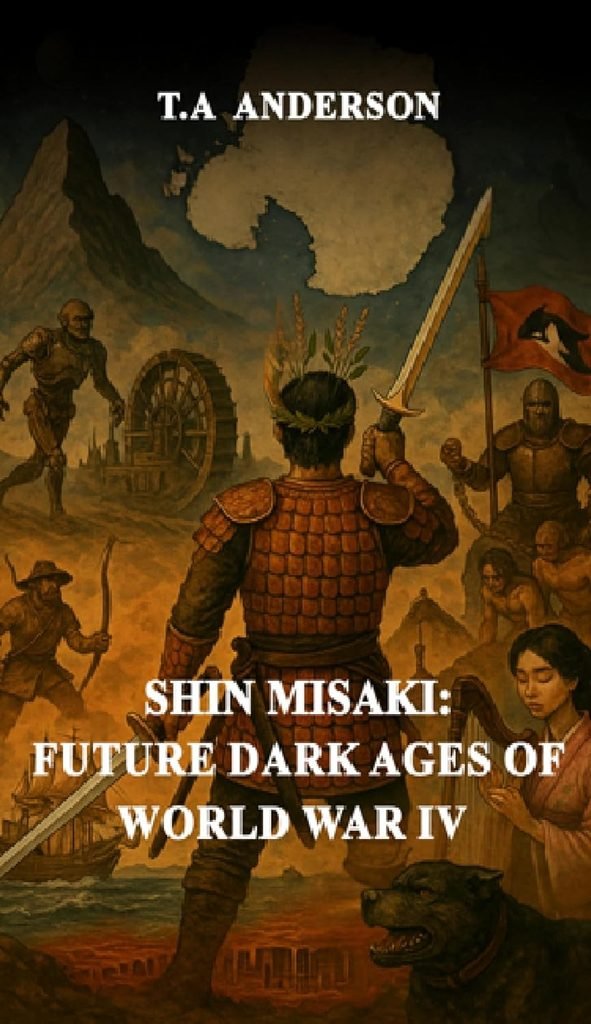
His novel, Shin Misaki: Future Dark Ages Of World War IV, starts after the collapse that follows World War III. Shin is a poor boy in a place run by force and fear. As the dark age known as World War IV sets in, his life fills up with violence, loyalty, power and loss. Heavy? Yes. Pointless? No. At its core it’s a story about human endurance, and what’s left of you when the world stops being kind. If you want survival fiction for adults with post-apocalyptic survival at the center and more feeling than gunfire, it fits.
Is It Your Kind of Book?
- You like bleak worlds that still have a pulse
- You don’t mind a slow reveal
- The Road stuck with you for weeks
- You’d rather get an honest ending than a neat one
It’s available as an ebook or paperback on the author’s website.
Picking Your Next One
Ask yourself what you want right now. A fast, nervy read? Go for a journey story with a deadline attached. Something slower that sits in your chest? Choose a grief-heavy title. Can’t decide? Read one novel and one true account back to back, and you’ll know which pulls harder in about a week.
If you want an even longer list, the post titled Best Post Apocalyptic Novels About Survival, War, and Human Resilience is worth opening next.
Final Thoughts
The best books about survival rarely hand you a lesson. They hand you a question: what would you keep, and what would you drop? Books about survival won’t make you any safer, but they might make you a little more honest about what actually matters.
Frequently Asked Questions
Start with The Road, On the Beach or Alas, Babylon, then try the Shin Misaki novel above. Each one treats survival challenges as a human problem more than an action problem.
Mostly dark, yes, but hope usually sneaks in somewhere. The point is rarely the suffering itself. It’s what people do while they’re stuck in it.
Pick a setting that already makes you curious (war, nuclear fallout, total collapse) and grab a short novel first. If it grabs you, go longer or darker.