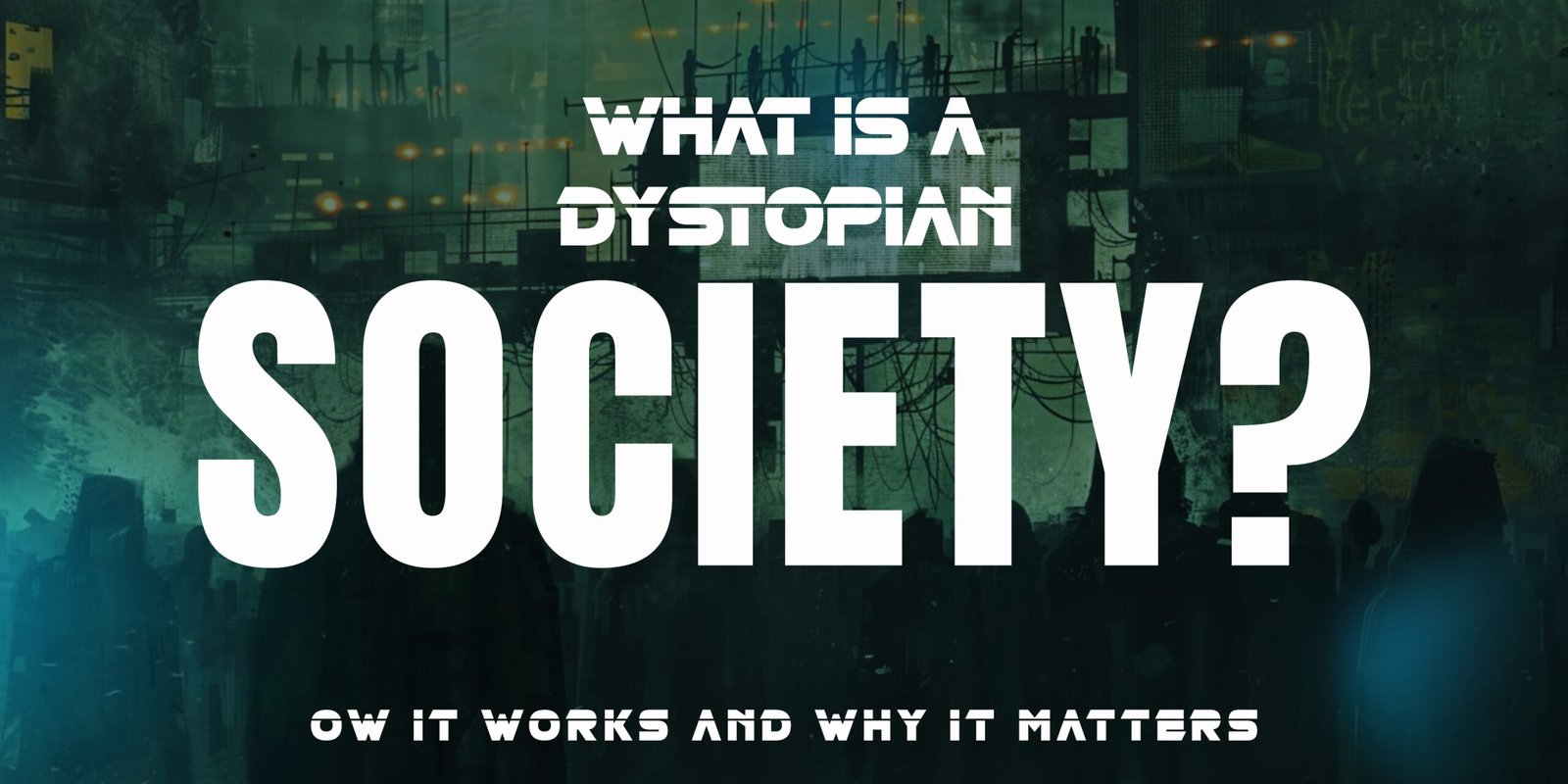
Quick answer, since that’s probably why you clicked this. What is a dystopian society? It is a fictional setting where oppressive systems control much of daily life. Fear does a lot of the work. So does surveillance. So does controlling what information people even get to see. People living inside one don’t choose much. Not their job. Not what they believe. Sometimes not even what they’re allowed to say.
How Dystopian Societies Actually Work
If you’re wondering how dystopian societies work, it usually comes down to stacking small controls until resistance feels pointless. These systems almost never rely on just one lever. They stack several. Until pushing back feels pointless, or just dangerous enough that nobody tries.
An authoritarian government sits at the top, usually. Deciding what’s acceptable to think or say, sometimes even to wonder about. Mass surveillance keeps everyone cautious, even alone, because you’re never quite sure who’s watching. Or if anyone is at all, honestly. Government propaganda can do more than spread false information. It can shape how people understand events until the official version becomes the only version they hear. Restricted information limits what people know exists in the first place. Can’t question something you were never told about, right.
Put those four together, brute force barely matters anymore. Fear just runs itself after a point.
Features You’ll Probably Recognize
Read one or two dystopian novels, and this stuff starts feeling familiar fast. Weirdly familiar, actually.
Class divisions, constant, usually dressed up as merit or safety or some version of “for everyone’s good.” Forced conformity right behind it; standing out becomes its own kind of risk, quietly. Loss of freedom gets framed as protection, not what it actually is. Social control runs through rules nobody can fully explain, not even the people enforcing them half the time.
None of it’s random. Writers reuse these patterns because real history already wrote the outline.
Life in a Dystopian Society, Stripped Down
Life in a dystopian society rarely looks like constant chaos, which might surprise you. That’s the part that makes it believable. People are not necessarily fighting in the streets every day. Instead, they gradually adjust to restrictions that become part of normal life. Characters just adjust, quietly, as their freedoms become smaller and smaller until there is barely anything left to take for granted.
Individual autonomy goes first, typically. Then relationships get monitored, somehow. Then even private thoughts start feeling risky to say out loud. Maybe the scariest part, if you actually sit with it for a second.
A Simple Breakdown, If You Want the Short Version
| Element | What It Looks Like |
| Government structure | Centralized, unaccountable, dressed as protective |
| Information flow | Restricted, filtered through propaganda |
| Social structure | Rigid class divisions, little mobility |
| Personal freedom | Minimal, closely monitored |
| Resistance | Small, scattered, risky |
That contrast helps explain why these fictional worlds can feel so unsettling, even before readers fully understand what is wrong.
Dystopia Versus Utopia
Comes up constantly. For good reason, too. A utopia promises something ideal, often flat-out impossible. A dystopia shows what happens once that promise curdles. Usually because somebody decided control mattered more than the ideal ever actually did.
The uncomfortable part most stories lean into, without saying it outright half the time. Utopias and dystopias aren’t always opposites. Sometimes it’s the exact same system. Just seen from a different seat inside it.
Why Writers Keep Returning to This in Literature
Dystopian society in literature, along with survival fiction, keeps getting revisited, and the reasons are pretty simple. Social inequality. Government overreach. Personal choice eroding so slowly that nobody notices until it’s mostly gone already. None of it was invented from nothing. Writers give these concerns shape through characters and stories.
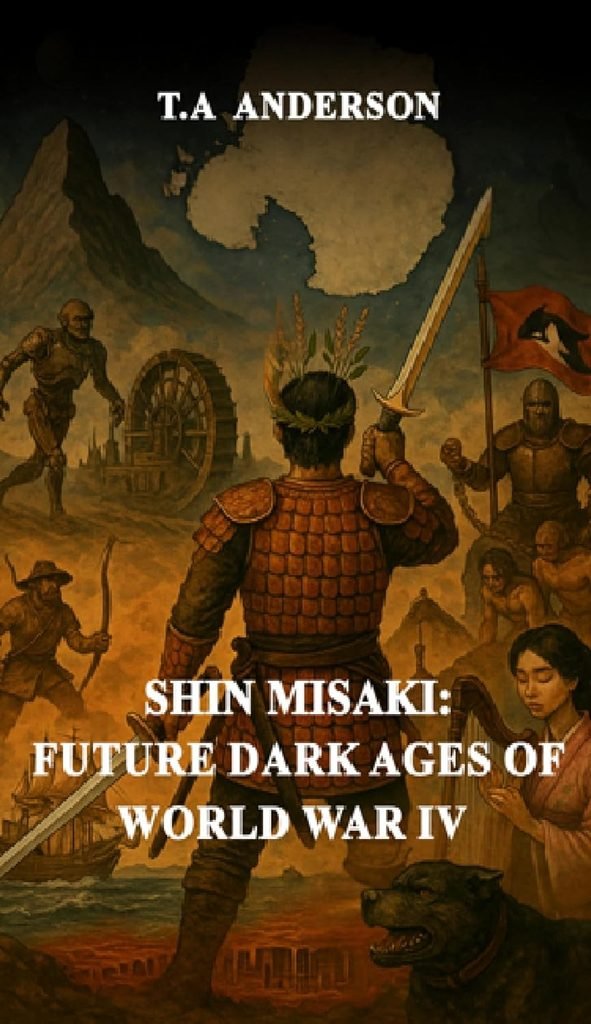
Theodore A. Anderson explores similar ideas through stories of survival, conflict,discipline and resistance. His book,Shin Misaki and the Future Dark Ages of World War IV, follows a feature shaped by global conflict, where control, survival and resistance become part of everyday life.
A Few Examples Worth Knowing
Plenty of examples of dystopian societies share this same blueprint, even when the setting looks nothing alike on the surface: surveillance states. Information blackouts. Rigid hierarchies, justified as order, every single time basically.
Found this interesting so far? Probably worth reading Why Do Dystopian Stories Feel So Real? too. Gets into the psychology behind why these worlds grip people the way they do, which is a whole thing on its own.
Why It Matters, Beyond the Fiction
Why dystopian societies matter isn’t about doom and gloom for its own sake. More about catching patterns early. Authoritarian creep. Surveillance expanding quietly. Information getting harder to access. Before any of it fully settles in anywhere, really.
Fiction’s just a low-stakes way to notice, that’s it. Probably the whole reason the genre keeps existing at all, if you think about it long enough.
Final Thoughts
It is not simply a setting for an exciting narrative, but rather a caution wrapped in fiction. It is made up of genuine fears about control, freedom, and the consequences when too much power gets concentrated into too few hands.
Theodore A. Anderson explores similar questions through stories of survival, conflict, and resistance. The fears will not dissipate anytime soon, and thus neither will the fiction surrounding them.
FAQs
A dystopian society is a fictional society where people have limited freedom and live under oppressive systems. Surveillance, propaganda, strict laws, and restricted information are often used to control daily life and discourage resistance.
Authoritarian government, mass surveillance, forced conformity, and restricted information show up constantly. Most dystopian societies stack a few together instead of leaning on just one.
A utopia promises something ideal. A dystopia shows what happens once that promise fails, or gets twisted on purpose. Often, weirdly, both share the same underlying system, just seen from different angles.